


Blog 5 min of reading
Little is known about the African continent.
We have some information acquired throughout life, whether from the education system or through the media (mainly news about political and economic systems), but when it comes to its culture and development, our knowledge is limited. Therefore, today we will talk about an integrated Region, where its population enjoys free movement, in a safe and peaceful environment.
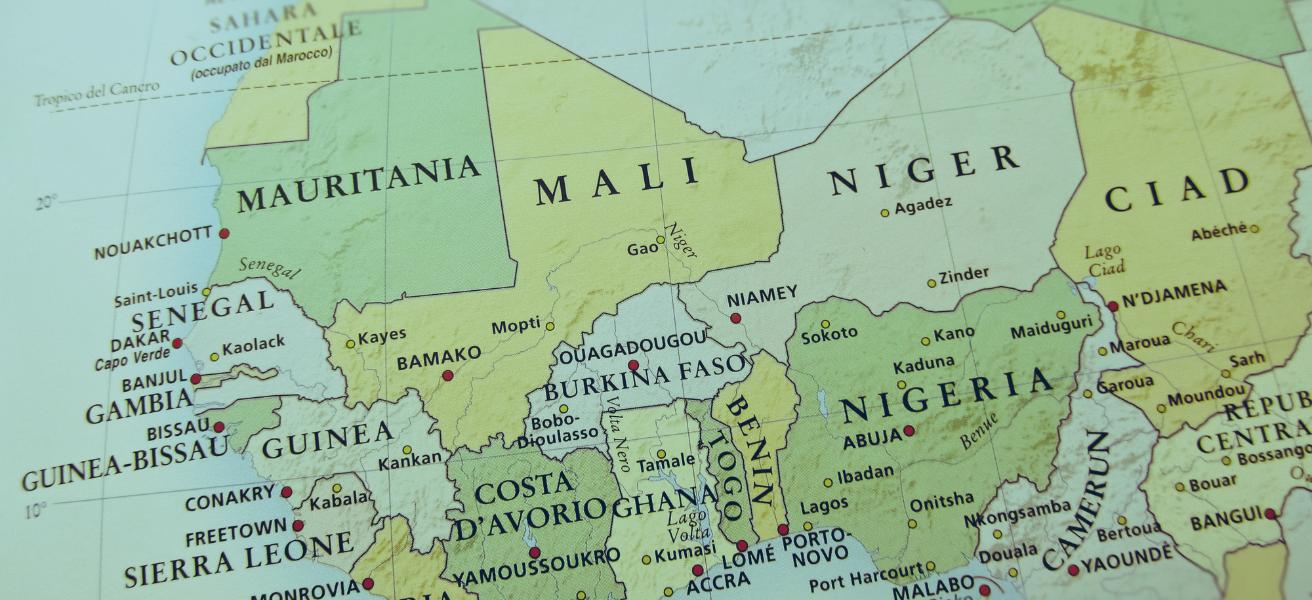
Well, we are talking about ECOWAS, the Economic Community of West African States, created by the Treaty of Lagos in May 1975. It is a group of 15 countries whose aim is to promote economic integration in all areas of activity of the Member States.
Its vision is to establish a borderless region, where the population accesses the region's abundant resources and demonstrates the ability to exploit them by creating opportunities in a sustainable environment. It is an integrated Region, where the population enjoys free movement, has access to efficient educational and health systems, and engages in economic and commercial activities, while leading a dignified life in an environment of peace and security. It is considered one of the pillars of the African Economic Community, as its principle is to promote the collective self-sufficiency of the Member States. Since the creation of the organization, all expectations have been high, and the objectives have been met. Its reputation is quite positive, and it is considered a successful regional organization.
In ECOWAS, three official foreign languages are spoken (English, French, and Portuguese), but there are more than a thousand local languages, including native cross-border languages, spoken by over 300 million inhabitants in a vast area of about 5.1 million square kilometers.
In recent years, the population of West Africa has experienced strong growth, rising from 70 million inhabitants to 350 million between 1950 and 2018, representing a very attractive potential consumer market. By the end of 2018, it accounted for about 40% of the population of sub-Saharan Africa.
According to United Nations projections, West Africa's population is expected to reach 550 or 600 million inhabitants by 2050. It is the youngest region in the world. Moreover, with about 5% of the world's population and an area exceeding 40% of sub-Saharan Africa, West Africa is the most densely populated.
Nigeria accounts for about 52% of the population and 65% of the Gross Domestic Product (GDP) of the sub-region. Cape Verde is the country with the smallest population (0.5%) and represents 0.3% of the community's GDP. Guinea-Bissau is the smallest economy of the sub-region, representing only 0.2% of the total GDP and 0.5% of the total population of ECOWAS. The second largest country in demographic and economic terms is Ghana, with respectively 7.8% of the total population and 10.8% of the GDP.
ECOWAS encompasses two monetary zones:
West African Economic and Monetary Union, acronym UEMOA, created by eight countries (Benin, Burkina Faso, Ivory Coast, Guinea-Bissau, Mali, Niger, Senegal, and Togo), sharing the same currency (FCFA) anchored to the Euro
West African Monetary Zone (WAMZ) created by five countries (Ghana, Gambia, Nigeria, Sierra Leone, Guinea-Conakry) and later joined by Liberia and Cape Verde.
Inspired by the European Union model, WAMZ was created with the goal of establishing a macroeconomic convergence zone that would give rise to West Africa's single currency.
The ECO currency was designed to replace the FCFA and the other 7 currencies, thus creating a single currency to facilitate trade between Member States without exchange barriers. Thus, each country can specialize in the production of certain goods, which other countries will need to source, intensifying internal trade and replacing imports from outside the zone.
This transition was scheduled for 2020, but the pandemic altered the plans. Currently, the implementation of ECO is expected by 2028. Thus, with the African economy emerging and the population growing, where could your company fit into this market?
The Grupo Oporto Forte can help you analyze this potential and integrate into the African continent! Schedule a meeting with our consultants at: comercial@oportoforte.com
Sources:
https://www.vidaeconomica.pt
https://www.ecowas.int