


Blog 1 min of reading
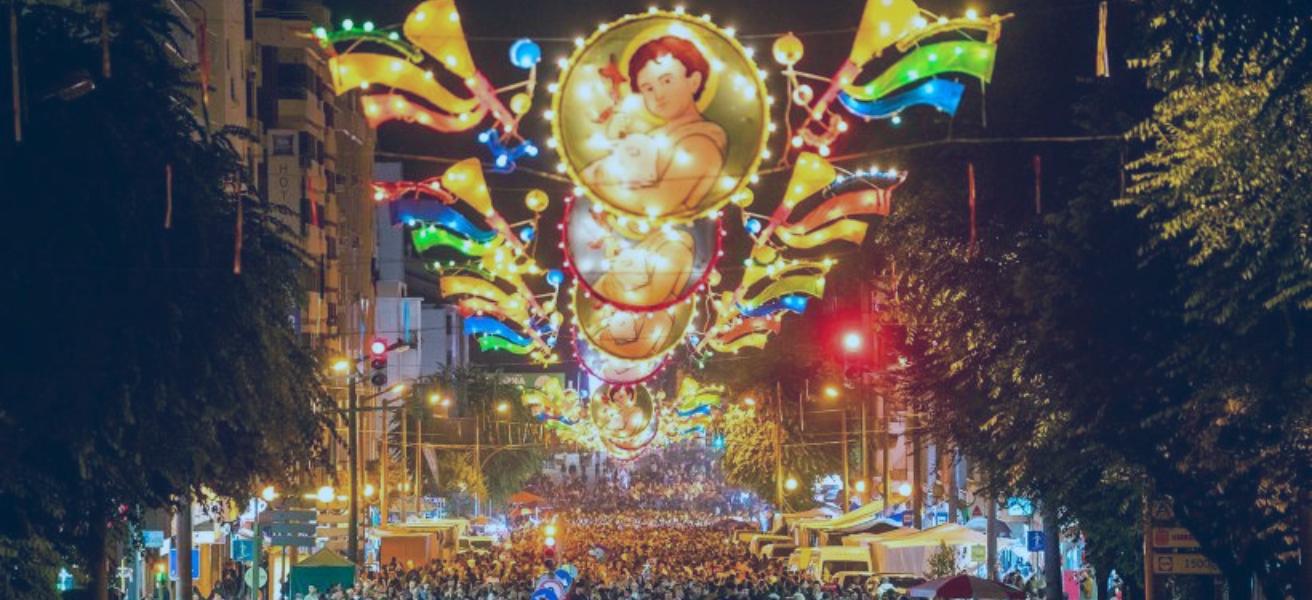
From grilled sardines to mungunzá, from bifanas to canjica, and from sangria to quentão, the Brazilian June Festivals exemplify how culture crosses borders and adapts to new contexts. With European roots, these celebrations arrived in Brazil in the 16th century with the Portuguese colonizers, being transformed and readapted to local customs.
Historians claim that the June celebrations in Brazil originate from European pagan festivals held during the transition from spring to summer, intended to ward off pests and evil spirits that threatened the crops. With the expansion of Christianity, these festivities were incorporated into the Catholic calendar and associated with three saints celebrated in June: Saint Anthony, Saint John, and Saint Peter.
Upon arriving in Brazil, the festivities transformed and developed their own characteristics. With African, Indigenous, and French influences, the celebration incorporated the exuberance and cultural diversity of Brazil, adapting to the rural context and country life, while maintaining strong European, particularly Portuguese, heritages.
In Portugal, the Festas dos Santos Populares remain a vital part of the country's cultural heritage, filling the streets and cities with colors and joy, especially in the cities of Porto, where São João is celebrated, and Lisbon, where Saint Anthony was born and, thus, is celebrated. In Brazil, the northeastern cities of Caruaru and Campina Grande are the main hubs of the festivities, attracting millions of people every year.
Despite the differences, it is possible to notice similarities between the traditions that have been preserved over the years, such as the bonfire, lit both in Portugal and Brazil to celebrate and purify; the decoration with flags and balloons; some typical foods like roasted corn, bread, and sweets; in addition to the important cultural role that celebrates the identity of both nations.
These cultural festivities show that internationalization is a dynamic process of adaptation and reintegration. Whether the Festas dos Santos Populares or the June Festivals, these celebrations illustrate cultural internationalization as a process that enriches both cultures involved and highlights the importance of adaptation and evolution as we enter new environments and scenarios.
If your company is interested in expanding to Brazil, talk to us!